Wednesday, August 17, 2022

America’s Dilemma: Power Abroad, Weakness at Home—and What to Do About It

First of Five Parts


Part One: The Power of the Anglosphere


It’s paradoxical that American soft power—that is, our political and cultural influence around the world—seems never to have been greater, and yet at the same time, America itself seems to be fissured.  That is, our politics riven and our population polarized.  Over time, this fissuring is assuredly problematic, not only for the sake of our beloved republic, but also for the sake of the free world coalition, which is under dire threat in Ukraine, and, also, to a lesser extent, in Taiwan. 


“Soft power,” of course, is a concept coined by Harvard’s Kennedy School academic, Joseph Nye.  He first used the term in his 1990 book, Bound to Lead: The Changing Nature of American Power, and then elaborated on it in his 2004 book, Soft Power: The Means to Success in World Politics.  As he wrote


Everyone is familiar with hard power.  We know that military and economic might often get others to change their position.  Hard power can rest on inducements (“carrots”) or threats (“sticks”).  But sometimes you can get the outcomes you want without tangible threats or payoffs. 


Applying the same carrot/stick concept to nations, Nye continued, 


A country may obtain the outcomes it wants in world politics because other countries—admiring its values, emulating its example, aspiring to its level of prosperity and openness—want to follow it.  In this sense, it is also important to set the agenda and attract others in world politics, and not only to force them to change by threatening military force or economic sanctions. This soft power—getting others to want the outcomes that you want—co-opts people rather than coerces them.  Soft power rests on the ability to shape the preferences of others.


Shaping the preferences of others, for better or worse, is exactly what the U.S. does best.  We might consider: Just in the past decade, such distinctly American concepts as Occupy Wall Street, #MeToo, the Green New Deal, and Black Lives Matter have resonated around the world.  In 2020, for instance, Keir Starmer, the leader of the British Labour Party, took a knee.  Starmer might well be a future prime minister of the United Kingdom; and yet he’s been imitating the gestures of an American football player.  We can add that the Dobbs case, reversing Roe v. Wade, was the subject of worldwide commentary, including from heads of state.  


Indeed, American memes are so strong that they even regularly infect adversaries; in March 2022, Russian autocrat Vladimir Putin railed against "cancel culture."  (Strange to think that Moscow was once a master of meme-generation, streaming out to the Communist International, but that was then; now, the Russians grope for our memes.) 


Part of American meme-mastery, of course, is American social media.  We can ask: Is there any important country in the world that does not have a Twitter account?   Is there anyone in the world who does not know about Donald Trump?  The yellow hair?  The red tie? MAGA?  


This is all part of the Anglosphere, the quasi-geopolitical notion that the world’s English-speaking peoples are destined for some sort of political unity, as well as cultural unity.  In fact, some 1.5 billion people around the world speak English—that’s about a fifth of the world’s population.  However, among the elite, the chattering classes, the percentage of English speakers is surely far higher.  So it was that the American journalist Ben Smith could declare that his forthcoming publication, Semafor, will target these English speakers, wherever they are on the planet.  “There are 200 million people who are college educated, who read in English, but who no one is really treating like an audience, but who talk to each other and talk to us,” he said. “That’s who we see as our audience.”


Yet the soft power of the Anglosphere is more than just the hegemony of the English language.  It’s also the appeal of the Anglo-Saxon idea—or, if one prefers, the liberal idea— of freedom of speech.  One needn’t argue that Francis Fukuyama was right about the worldwide “End of History” to nonetheless concede that he was right about the preference of many people.    


For many—and by many, I mean billions—this endless give and take that comes with freedom is what makes American debates, cultural as well as political, so exciting.  In the most literal sense, you don’t know what’s going to happen next, because there’s no controller and no censor.  Whatever comes spewing out of American media, including social media, is whatever people are thinking.  And if much if it is unappetizing, there’s always some of it that is appetizing, and there’s always much of it that is compelling.  


So we might be reminded of what Thomas Jefferson wrote from Paris in the 1780s: If he was faced with a choice of “a government without newspapers or newspapers without a government, I should not hesitate a moment to prefer the latter.” This endless contention of media not only makes for interesting news consumption (even if it takes some effort to smelt away the dross) it also makes for better governance, as a free press checks and balances the state.  This point made by Jefferson, our first secretary of state, was well articulated by the 71st secretary of state, Antony Blinken.  On March  18, 2021, in an impromptu debate with the Chinese foreign minister, Wang Yi, Blinken declared


. . .  there’s one more hallmark of our leadership here at home and that’s a constant quest to as we say, form a more perfect union.  And that quest, by definition, acknowledges our imperfections, acknowledges that we’re not perfect.  We make mistakes.  We have reversals, we take steps back.  But what we’ve done throughout our history is to confront those challenges, openly, publicly, transparently. Not trying to ignore them.  Not trying to pretend they don’t exist.  Not trying to sweep them under the rug.  And sometimes it’s painful.  Sometimes it’s ugly.  But each and every time we’ve come out stronger, better, more united, as a country.


Fact check: True.  At least for most of U.S. history.  Yet today, many argue that “disinformation” is such a threat that something must be done, such as Sovietly named—and mercifully short-lived—Disinformation Governance Board.  Yet whatever the U.S. government does, or doesn’t do, about “disinformation,” there are easily a hundred, if not a thousand, non-profits, all monitoring, analyzing, and warning against “disinformation.”  Of course, as a reminder of the power of the Anglosphere, one can go to the internet and google (two more agents of the Anglosphere) and read all about it.  


Of course, a Google search for “civil war” and associated concepts will yield up a gazillion hits.  And it’s hard not to agree with at least some of the concerns about the future of our union.  As I wrote in March for The American Conservative, “The United States has all the preconditions for a civil war today except one: the willingness to actually fight for the sake of disunity.”  I still think that’s true, even if I’m a little less sure about the unwillingness to actually fight. 


So this is the dilemma of American power: Around the world, the Anglosphere is robust, and yet here at home, America is deeply divided.   So can this divided house still stand?


This question is likely to be sharpened if America continues to show success in Ukraine.   As of mid-August, it seems that Western military aid is so enhancing the courage of the Ukrainian armed forces that it’s possible, maybe probable, that Ukraine will fight Russia to some kind of draw.  A Korean-style stalemate seems likely—and given the early expectations of a swift Russian victory, that’s a comparatively positive outcome.  To be sure, it’s tragic to think that Russia will hold on to a single acre of Ukrainian territory, and yet the good news is that Ukraine is now firmly anchored in the West.  At this rate, it will soon be obsolete to speak of Russia’s implied dominion over Ukraine, just as it is anachronistic to speak of Japan’s dominion over Manchuria, or of Britain’s dominion over Palestine. 


So that’s the good news: The perimeter of the Free World has been expanded, with Ukraine firmly within the perimeter.  As has long been the case, the perimeter of freedom is mostly safeguarded by the hard power the American military, bolstered and amplified by American soft power.   


Yet the bad news is the aforementioned weakness at home.  The fierce debate over the legal issues surrounding Donald Trump are likely enough to resolve themselves soon enough—the American legal system may move slowly, but it grinds hard—and yet the deeper conflicts of geography and demography are likely to remain, and that could undercut our hard power, and maybe even our soft power.  As I argued in that March piece, red vs. blue could be the new Austria and Hungary. 


But I’m getting ahead of myself.  My only point now, in part one of this four-part series, is to emphasize the strangeness of our situation: Our soft power abroad is manifest, and yet our soft underbelly at home is obvious.  So it’s useful to explore how past realms managed their soft power.  


Next in Part Two: How the Romans wielded soft power.   


(Picture credit: Wikipedia) 

Thursday, May 05, 2022

A Vindication of Aleksandr Solzhenitsyn—From an Unexpected Source

At a time when everything Russian is being canceled—from the Bolshoi to vodka to the music of Tchaikovsky, who died in 1893—the May 12 issue of The New York Review of Books provides a welcome respite to indiscriminate and anachronistic Russophobia.  Gary Saul Morson, a professor of Slavic literature at Northwestern University, reviews two new translations from among Aleksandr Solzhenitsyn’s many published works: March 1917: The Red Wheel, and Between Two Millstones: Exile in America, 1978-1994, both bravely published by the University of Notre Dame.


Morson’s ultimate point is that Solzhenitsyn was simultaneously political and anti-political.  The Russian author (1918-2008), was honored with the Nobel Prize in 1970 “for the ethical force with which he has pursued the indispensable traditions of Russian literature.”  And yet his most famous volume is non-fiction, The Gulag Archipelago, published in English in 1974.  That was the title that rocked the world of this American Baby Boomer, who had previously been schooled mostly in liberal-left dogma about the moral equivalence of the United States and the Soviet Union—except, of course, when “Amerika” was said to be worse. 


So sure, when necessary, Solzhenitsyn, himself a survivor of the Gulag—as a decorated Red Army officer fighting the Nazis, he was arrested in 1945 and imprisoned for eight years for the offense of cryptically critical comments about Stalin—could be political.  If, that is, by “political” we mean standing up for human dignity.  


At the same time, Morson emphasizes that Solzhenitsyn was firstly a spiritual man who wrote, “Political activity is by no means the principal mode of human life . . . The more energetic the political activity in a country, the greater is the loss to spiritual life.  Politics must not swallow up all of a people’s spiritual and creative energies.  Beyond upholding its rights, mankind must defend its soul.” 


Yet in recent decades Solzhenitsyn’s reputation has been besmirched by accusations of anti-Semitism and also, in strange posthumous way, by his identity as a Russian Orthodox Christian, which has put him, in the minds of some, in the same pot with the odious (and hypocritically sacrilegious) Vladimir Putin.  Both accusations, according to Morson, are unfair.  He writes of the first, “The charge of anti-Semitism particularly offended Solzhenitsyn, who, as some critics conceded, defended Jewish dissidents and the right of Jews to emigrate in order to avoid religious and other persecution in the USSR.” 


Solzhenitsyn was also political insofar as he was an ardent anti-Communist.  Notably, he lamented the failure of meliorative monarchism to stave off the red tide.  In Solzhenitsyn’s telling, the event that canted Russia to perdition came in 1911, when Pytor Stolypin, the reformist prime minister of Tsar Nicholas II, was assassinated.  And the assassin happened to be Jewish.  As Solzhenitsyn argued, in the absence of reform from above, the Bolsheviks—led by the gentile Lenin—could plot revolution from below.  In Solzhenitsyn’s words, “Russia and Communism had the same relationship as a sick man and his disease.”


And Morson makes clear that the other charge—that Solzhenitsyn shares psychic space with the murderous nationalism of Putin and his bearded Russian Orthodox “Rasputin,” Aleksandr Dugin—is equally absurd.  In fact, Solzhenitsyn was the opposite of a nationalist: “Nationalism, as we usually envisage it, appalled him.”  


Morson adds that three decades ago, Solzhenitsyn urged Russians not to object to the breakup of the Soviet Union.  In particular, he was happy to see the non-Slavic parts of the fallen evil empire go their own way.   And while he might have wished that the Slavic lands of Belarus and Ukraine would have remained with Russia, he thought it was their right to declare independence. Writes Morson: “Foreseeing the conflicts likely to arise eventually if Ukraine, with its large Russian-speaking population and its close cultural ties to Russia, chose to secede, Solzhenitsyn, who considered himself both Russian and Ukrainian, hoped to preclude the devastating conflict we see today.” 


Morson dwells upon the self-descriptively apt title of one of Solzhenitsyn’s books, Between Two Millstones; the two millstones being communism and liberalism.  So Solzhenitsyn, being more mystical than political, resembles another Russian writer, Leo Tolstoy (1828-1910).  In his time, Tolstoy—best known for his novel War and Peace, with he himself being a pacifist—was equally hard to peg into familiar categories. 


Today, it’s heartening to see such nuance—Solzhenitsyn being shown as an exemplar of a distinct strain of Russian thinking and creating, far apart from Russo-Bolshevik barbarism—in the pages of The New York Review of Books.  The tome-y publication, founded in 1963, is certainly on the left, and yet it’s not in the least woke: the same May 12 issue includes admiring reviews of books on the sculptor Bernini, the painter David, and art audiences in 19th century France.  


So by that reckoning, perhaps @nybooks is finding itself sliding to the right.  After all, by regarding the canon as something worth remembering, it is defending the canon—and thus the defender is on the other side of the barricade from the attacking zero-year iconoclasts.  So make room, cultural conservatives; some new recruits are heading our way, however reluctantly. 


Interestingly, in his historical novel March 1917, Solzhenitsyn is unsparing in his critique of proto-woke public officials, namely the liberal Russians who took office after Tsar Nicholas II abdicated.  These weak men could not bring themselves to defend their office, their country, or their civilization against marauders—first, common criminals, and soon, the Bolsheviks.  Hence the historical figure Prince Lvov, who served for a few months as the first prime minister of post-tsarist Russia, says to his colleagues, “Why does a free state need police at all?”  Such naiveté has a short life expectancy. 


Morson doesn’t mention it, but such mush-headed liberalism echoes that of the Hungarian Mihály Károlyi, who misruled Hungary at around the same time.  Like Lvov, Károlyi drew the wrong lesson from World War One, namely that nothing was worth defending.  And so Károlyi abolished the army, leaving his country to be overrun by foreigners; moreover, Károlyi’s weakness made it possible for the communist Béla Kun to seize power in Budapest for a brief but bloody epoch of red terror.  


So we can see: In both instances, Russia and Hungary, easy-on-evil libertarianism allowed the absolute worst forces to triumph.  And that’s certainly a warning message that Americans need to hear. 


Solzhenitsyn’s faith gave him a keen apprehension of wickedness.  “Evil refuses to know the truth,” says one of his characters. “Evil people usually know better than anybody else just what they are doing.  And go on doing it.”  No society-is-to-blame relativism here.  


Still, Solzhenitsyn sought more than just outward good behavior, important as that was.  He wanted a deeper inward search for the good.    Morson closes by quoting Solzhenitsyn’s warning against the siren call of secular utopianism: “How could you remake the world if you couldn’t figure out your own soul?” 


Such wisdom is timeless.  And so we can hope, and maybe pray, that Solzhenitsyn’s voice will be heard in Russia, long after Putinism is consigned to the ash heap of history.  And come to think of it, there are a few world-girdling systems in the West that could benefit from the same graced humility.  


Saturday, May 22, 2021

The Problem with Joe Biden’s Middle East Cease-fire: Lessons from Clausewitz


Israel and the Biden Administration’s “New Ideas”


The Main Stream Media has been admiring of the Biden administration’s decision to broker—some would say impose—a cease-fire on the state of Israel and the terror group Hamas.  


For instance, on May 21, shortly after the cease-fire, the Associated Press ran a story headlined, “Hour-by-hour: Biden’s behind-the-scenes push for cease-fire.”  The reporter, Aamer Madhani, was obviously well briefed by Biden aides, and so in addition to describing phone calls between President Biden and Israeli Prime Minister Netanyahu, the AP story added such nuggets as, “The president and senior aides had over 80 engagements, by phone or in person, in search of an endgame to the fighting.”


That same upbeat assessment—Biden and his team, hard at work—was manifest in a May 21 opinion piece by The Washington Post’s well-connected columnist, David Ignatius.  He, too, was amply backgrounded by Biden aides, and so he could faithfully describe how the president operated “slowly, quietly, in personal conversations.”  Ignatius’ admiring take was that Biden’s approach “probably saved lives.”  


Venturing further, from play-by-play to prescription, the Post man added that Gaza now needed “humanitarian assistance” in the short term, as well as, in the longer term, some sort of new political configuration: “Perhaps the trickiest part will be strengthening the Palestinian Authority, ideally through a unity government with a Hamas that agrees to accept Israel and renounce violence.”  


Some would say that it will be, er, tricky to persuade Hamas to accept Israel’s right to exist—as the rejection of that right is the essence of the Hamas worldview.  And as for unity with the Palestinian Authority, it’s worth recalling that Hamas split off, violently, from that same PA in 2007; that’s how Hamas ended up ruling the Gaza Strip.  


Nevertheless, hope springs eternal in MSM breasts; ah, for the fond dream of fresh  diplomacy.  Thus on May 21, The New York Times editorial page pronounced itself pleased with the cease-fire, adding that it “didn’t come a second too soon.”  Then the editorial added that “new ideas” for the region were needed.  


And what might those “new ideas” be?  From the editorial: “The Biden administration should appoint an envoy to the Palestinian people, tasked with restoring relations with Palestinian officials and building ties with civil society groups and the new generation of leaders who have been shut out of power with the lack of elections.  The portfolio should include Palestinian people, broadly speaking, including their vital ties to brethren in Israel and throughout the diaspora.”


There’s plenty to unpack there, but we can see, at minimum, the Times envisions an ambitious role for the U.S., bidding it to become much more deeply involved on the Palestinian side.  That’s a change, of course, from the policy of the Trump administration, which was strongly pro-Israel and mostly ignored Palestinian demands.  


Indeed, we might speculate that one reason the Times is so in love with the idea of a new direction in the Middle East is precisely because of the contrast it makes with the ideas of the Dreaded Trump.   And of course, the major media, joined by the Biden administration and many Democrats, are not at all fond of Netanyahu.  


So any new American activism, as advocated by Ignatius, the Times, and many other leading voices, would amount to a mandate to the Biden administration to play a more activist role in the region, bringing new energy, and new empathy, to the Palestinian cause.  Not surprisingly, the Palestinians would welcome such a démarche, while unsurprisingly, most Israelis would not. 


In fact, the Biden administration is already bringing its different perspective to the Middle East.  One vivid indicator of the change came on May 20, when Biden spent eight minutes talking with Rep. Rashida Tlaib, the radical Democrat from Michigan.  The conversation was held outdoors, on an airport tarmac, in full view of reporters and their cameras.  Such extended “photo ops” with presidents do not happen by chance.  In other words, Biden was sending a strong signal: He is listening to pro-Palestinian voices.  


Ben Rhodes, former deputy national security adviser under Barack Obama, has also noted the change.  Singling out the pro-Palestinian efforts of another Democrat in the House, Rep. Alexandria Ocasio-Cortez, Rhodes said, “The Overton window [is] shifting before your eyes.”  That is, the window of possible policy options.  


Continuing, Rhodes said, “It’s just simply a fact that there was never this kind of pressure vocally from the left on issues related to Israel during the Obama years.”  And he concluded, “It’s going to be harder to just stick to the old line of essentially unquestioning support for the policies of the Israeli government.” 


Yet if the predominantly center-left American foreign policy establishment is pleased with Biden’s shift, many Israelis are not.   


That displeasure was made clear in another Times story, datelined, Ashkelon, Israel, and headlined, “‘The Mission Wasn’t Completed.’ Cease-Fire Prompts Israelis’ Disappointment.”  As the two reporters, Isabel Kershner and Adam Rasgon, explained, “Here, and across Israel, there were other common sentiments: a nagging sense of disappointment that nothing had been resolved by the fighting, and concern that the truce was fragile and premature.  Instead, many Israelis said that the military should have carried on pounding Hamas for another week or two.”  


Moroever, the reporters noted that “shared dissatisfaction throughout the country signaled Israelis’ growing impatience with what they see as hastily arranged, unconditional cease-fires.  Each successive, inconclusive round of conflict has only added to the sense of futility, with no decisive victory or conclusion in sight.”  And the article pointed to a May 20 poll, showing that 72 percent of Israelis thought the air campaign in Gaza should continue, whereas 24 percent said Israel should agree to a cease-fire.  In other words, by a 3:1 margin, Israelis opposed the cease-fire. 


So we can see: The gulf between the D.C. establishment and the Israeli public is wide.  And it seems reasonable to assume that any Israeli government is going to reflect the nation’s public opinion.  


What Would Clausewitz Say?


As we wait to see what happens next on the ground, we might, in the meantime, consult a classic work.


And that work is On War, written by the Prussian military strategist Carl von Clausewitz (1780-1831).  Clausewitz never opined on Israel and the Middle East, but he did have a lot to say about how nations and groups fight one another, and how they might expect to prevail.  And despite all the changes in war tactics and technology over the last two centuries, Clausewitz endures, because his ultimate wisdom is psychological and political, as opposed to tactical and technological.


Clausewitz’s most famous dictum is, “War is only a continuation of State policy by other means.” 


To put that another way, War exists within politics.  Wars are started by political figures, and they are fought so long as political figures wish to keep fighting.  


To put that another way, victories on the battlefield, while certainly important, are not decisive in winning a war.  What is decisive is the moment, if it comes, when one side loses the will to fight.   


And as of now, it doesn’t appear that Hamas has lost its will to fight.  Hence this headline in Al Jazeera: “Hamas claims victory as Gaza celebrates cease-fire.”  The point here is not to suggest that Hamas won the 11-day battle in any military sense; clearly, it did not.  Instead, we see that Hamas does not feel defeated.  


In the defiant words of Hamas spokesperson Abdel-Latif al-Qanou, “Israel has withdrawn in the face of the armed resistance, and did not obtain any of its objectives it said it would when it launched its offensive.”  By these words, in the Clausewitzian sense, Hamas definitely has not been defeated.   


To be sure, if Hamas had been totally annihilated, a continued fighting spirit might be seen as delusional, or even, in a grim way, mirthful, as in the bloody confrontation with the Black Knight in the 1975 film, Monty Python and the Holy Grail.  And yet Hamas was not annihilated—the May 21 cease-fire made sure of that.  


Yes, Hamas has been bloodied, maybe even devastated, but it is still a force.  As The Washington Post reported, “For Hamas, Israel may have once again inflicted heavy losses—both on the movement and on civilians in Gaza—but the group remains in control of the territory of some 2 million people and little has fundamentally changed.”


By this reckoning, those citizens of Israel who told the Times reporters that their military needed more time to finish the job were making a good point.  Hamas is still in charge in Gaza, and still has the will to fight.  We can note that such is often the case with guerrilla wars and asymmetric combats: One sides wins big, but not big enough, and so the fighting continues.  [Update: a May 23 poll asked Israelis, Who won the cross-border fighting?  And the answer: 28 percent said Israel, 16 percent said Hamas, and 52 percent said neither side.  Not a result sure to dishearten Hamas.] 


So perhaps this is the lens—the Clausewitizian lens—through which we should see the May 21 cease-fire. 


That is, Hamas has plenty of fighting spirit, and still rules Gaza.  And now, we might presume, humanitarian aid will come flowing into that territory, much of it, no doubt, to be skimmed off by Hamas.  And quite likely, too, more armaments will flow in, most of them, apparently, from Iran.


So in such a context, we can ask: How long until the next violent eruption?  How long till the next Hamas rocket attack? 


In the meantime, Israel is in a difficult position.  Having been flailed by much of the Western media during the recent fighting, and criticized by the Biden administration, the Israelis will likely find themselves having to abide, strictly, to the terms of the cease-fire.  Which is to say, it will likely take a significant provocation by Hamas to embolden Israel to even think about suspending the cease-fire and launching a pre-emptive strike—assuming, of course, that the IDF can detect the danger.  


Yet Hamas, operating under few, if any, of those political constraints, can pick and choose its next time to strike. 


Thus we something that’s familiar to Middle East observers: a double standard.  That is, if Israel breaks the cease-fire, it is in trouble with the Biden administration, as well as the United Nations, noisy NGOs, and all the other usual critics.  And yet if Hamas breaks the cease-fire, the Biden administration, joined by the others, will likely rush in to seek a new cease-fire, and then, after that, come rushing in with humanitarian aid—and that aid is, of course, fungible.  


So we are now seeing a new kind of asymmetry: Hamas plots and ponders the timing of its next attack, while the Israelis must live with the constant threat of that next attack. 


To be sure, Israel has its Iron Dome defense system, and it worked well these past few weeks—and yet not quite well enough, as twelve Israelis died in the bombardment, and considerable property damage was done.  It’s hard to enjoy the fruits of high-tech prosperity while staying mindful of the location of the nearest bomb shelter.


No doubt, Israel is further refining Iron Dome and perhaps considering other kinds of defensive shields.  And no doubt, too, Hamas and its backers are refining their offensive capabilities.  (And we can be sure that to Israel's north, in Lebanon, Hezbollah, which has its own rocket arsenal, is paying close attention to Israeli capabilities.)  So who will have the upper hand?  We’ll likely find out in the next round of fighting.  


Strategic Depth


Another problem for Israel is that Hamas has strategic depth.  That is, Hamas has a big ally, Iran, that offers it a source of support and supply, if not quite actual refuge.  (To a lesser extent, Hamas can also count on support from Qatar, which does provide a physical refuge to Hamas chief Ismail Haniyeh.)


And so long as Hamas has the Islamic Republic for strategic depth, then Israel has a problem.  That is, Israel can “mow the lawn,” as some say, of Hamas in Gaza, and yet it must be resigned to the reality that the “grass”—more like a deadly weed—keeps growing back. 


This challenging situation is contingent, of course, upon the Iranians’ willingness to keep supplying Hamas, and if no effective way can be found to quarantine Gaza from new weapons shipments.  


And at this point, some might find parallels between the Israeli confrontation with Hamas and the U.S. confrontation with Vietnam, from 1965-1975.  That war, of course, ended in disappointment for the side that won all the battles during the actual fighting—and in victory for the side that lost all the battles.  


Yes, without a doubt, during the Vietnam fighting, the U.S. was routinely victorious on the battlefield, albeit not without cost to itself.  And yet the North Vietnamese could receive supplies from, and gain diplomatic support from, the adjacent People’s Republic of China (in addition, another patron, the Soviet Union, was adjacent to China).  And that help was enough to sustain North Vietnam to ultimate victory, battlefield defeats notwithstanding.  


To be sure, there are enormous differences between the U.S. then and Israel today: Most obviously, a) Israel is much more committed to its border security than the U.S. ever was to combating the “domino theory” a half-century ago; b) Israeli public opinion is solidly supportive of the Gaza effort, seeing it an an existential issue for the nation; that’s something no American ever thought about Vietnam; and c) Gaza and Iran, and Qatar, are not adjacent. 


Yet nevertheless, some similarities present themselves: Iran is an ally of Hamas, and it does provide it with strategic depth.  


So now, what can Israel do?  If it can’t find a way to shut down the direct threat from Hamas—and the Biden administration seems to be the chief obstacle now to further attempts to shut it down—then Israel will have to consider what it can do to take away Hamas’s strategic depth, mostly, as we have seen, Iran. 


We might recall that such strategic-depth neutralization was the tack taken by U.S. President Richard Nixon in 1972, as he sought to secure “peace with honor” in Vietnam.  Realizing that the North Vietnamese were never going to give up—and thus, never going to lose, no matter how painful their losses—so long as they had the depth of China and Russia, Nixon traveled to the capitals of both of those countries and made a deal: The U.S. would have free rein to cut off, finally, North Vietnam’s northward supply chain, and, while it did so, the Chinese and Russians would do nothing, militarily or diplomatically, to get in Uncle Sam’s way. 


As a result, Nixon was able to launch the Christmas bombing of 1972, and that onslaught against the suddenly isolated North Vietnamese finally persuaded the country to agree to end the war on terms acceptable to the U.S.—at least for a “decent interval.”  


Of course, at this moment today, it’s impossible to imagine the Israelis and Iranians reaching any sort of bargain that would isolate Hamas, in the way that Nixon isolated North Vietnam.  


And so, barring some miraculous change of heart in Tehran—or some crafty calculation that we can’t now foresee—that leaves another option, which is some strong Israeli action (kinetic, cyber, whatever) that would be so devastating as to force the Iranians to reconsider their patronage of Hamas.  (Or, perhaps, on Haniyeh in Qatar.)  Admittedly, it’s hard—although not impossible—to imagine such strikes.  


So perhaps what’s needed is to look to Iran’s strategic depth, which consists, of course, of the countries of Russia and China. Yes, it’s the looming presence of those two powers that has made Israel—and, in the past, the U.S.—shy away from overt military action against Iran. 


Yes, these are mega grand-strategic questions: Could the cord between Russia/China and Iran be broken?  Or could the connection between Hamas and Iran/Qatar be broken?  If so, by sticks?  Or even, somehow, by carrots?  


In the meantime, this much is easy to see: The Israels are in a quandary.  As Clausewitz would say if he were following Mideast news, unless and until Hamas’ psychological and political thinking changes, mere military defeat will not change the terror group’s current course.  


And of course, the Biden administration isn’t helping—at least, it’s not helping Israel.  Instead, this administration seems more attuned to the bad optics of internationally televised violence, and how to switch it off.  And if, along the way, Netanyahu gets switched off, all the better.  


Thus we can see: Biden administration policies will likely have no affect on Hamas’ thinking.  Indeed, post-cease-fire, Hamas now stands to be rewarded by the “international community” with billions in new aid pouring into Gaza, as well as, perhaps, by new diplomatic initiatives that would likely raise Hamas' stature.  


We might add that renewed diplomatic efforts might include some new effort at international mediation, including, perhaps, the presence of U.N. peacekeepers.  But the U.N. has been attempting to keep the peace in the area since 1948, and the results speak for themselves.  History shows that at best, the peacekeepers are spectators, and at worst, they end up collaborating with the anti-Israel side; that is, the side with the most member-countries in the U.N.


No wonder, in Clausewitzian terms, Hamas feels that it’s doing just fine.  


Israel has proven it can win the fighting, and yet, given the current correlation of international forces, it can’t win the long struggle.   


Victory in that long struggle—to find a secure place among the nations—will require some Clausewitzian mojo, applied sternly to foes, and gently to friends.  


Saturday, March 11, 2017

"A Deus ex Machina for the Climate Change Problem"--my piece in American Conservative on the need for a more ambitious carbon-capture program.


Tuesday, February 28, 2017

Bollards and other Barriers: The Value of Passive Defenses in Homeland Security

The news is relentlessly sad: cars running over pedestrians, in Alabama, and in Louisiana--and that's just in the past few days. Whether the perpetrators are drunks, psychos, terrorists--or someone who has lethally lost his or her wits and shouldn't be driving--that doesn't make much difference at the moment when tons of steel comes crashing down on innocent people. 

In the wake of the truck-attack in Nice, France, I wrote about the value of passive defense for Breitbart last summer, here, and here.

The barriers could be static, active, or even self-aware.  But we need to do something.


Monday, February 27, 2017

Carbon Capture as a solution--perhaps THE solution--to Climate Change


This is a screen-grab from a video produced by Carbon Engineering, a British Columbia-based company which promises "industrial scale capture of CO2 from ambient air."  Bill Gates is an investor.

From a non-scientific political perspective, I have written about this idea in the past: In 2012, in 2014,  in 2015, in 2016, and then again in 2016. 


Sunday, October 09, 2011

Serious Medicine Crash--update


According to the Medical Innovation & Competitiveness Coalition, a unit of the National Venture Capital Association, medical investment is dramatically falling off

The survey found that U.S. venture capital firms have been decreasing their investment in biopharmaceutical and medical device companies over the past three years and expect to further curtail such investment in the future. Overall 39 percent of respondent firms have decreased their investments in   life sciences companies over the last three years and the same percentage expect to further decrease these investments over the next three years, some by greater than 30 percent. This is roughly twice the number of firms that have increased and/or expect to increase investment.

While 40 and 42 percent of firms expect to decrease investment in biopharmaceutical and medical device companies respectively, 42 and 54 percent expect to increase their investment in non-FDA regulated healthcare services and healthcare information technology companies respectively.

In another alarming sign, survey respondents expect to see significant investment decreases in companies fighting serious and highly prevalent conditions including cardiovascular disease, diabetes, obesity, cancer, and neurological diseases.

“More than 100 million Americans suffer from diseases for which there are still no cures, or even meaningful therapeutic options. To conquer disease and relieve suffering, we must have a medical innovation pipeline that is as strong and robust as possible,” said Margaret Anderson, executive director, FasterCures. “Bringing critical therapies to market requires venture capital investment to spur a thriving life sciences industry as well as having a regulatory system that’s appropriately resourced and equipped to ensure innovation is translated to better health.” 

H/T: Manhattan Institute's Medical Progress Today

Sunday, March 13, 2011


Why the surge of interest in Ronald Reagan? 


Now that it's a truth universally acknowledged that RR was a great--even his enemies would cop to "consequential"--president, the MSM culture is finally doing the sort of close journalistic/historical spadework and chronicling of his presidency that they didn't bother with back in the 80s; except, of course, for scandal-mongering. 

The title of this new book in question, Rawhide Down: The Near Assassination of President Reaganspeaks to the natural drama of historical watershed, while the title of this article is a play on William Manchester's 1967 book, Death of a President, about the Kennedy assassination.

Wednesday, March 02, 2011

My Newsday column of October 28, 2003, concerning Donald Rumseld's performance as Secretary of Defense as the Iraq insurgency worsened.  In particular, his habit of writing self-exculpatory memos. Before, of course, he turned to writing self-exculpatory books.

^^^


So what’s up with Don Rumsfeld?   Was the Secretary of Defense being truthful, or just wacky, when he wrote the now-famous memo of October 16, in which he declared that the war on terror would be “a long, hard slog”?  Or was he being cynically shrewd?  Was it part of a plan to secure a better place in history for himself than for the war he helped start?  

Right now, speculation about Rumsfeld is all over the place.  The headline in Newsweek.com lauded him for showing “rare candor.” But Time’s Joe Klein diagnosed him as suffering a “slow motion public nervous breakdown.”  For his part, the defense chief said that he was just trying to inject “a new sense or urgency” into America’s war on terror.

Rumsfeld is famous for peppering subordinates with “Rummygrams,” also called “snowflakes,” because they fly so freely around the Pentagon.  As a man who knows his way around Washington--he was elected to Congress in 1962--he must have known that his “slog” memo would be leaked.  The document was not classified, and he subsequently told reporters that he has no plans to investigate the leaking.  Indeed, he joked on October 23, “I re-read the memo in the paper and thought, not bad.”
So when he wrote, “Is our current situation such that ‘the harder we work, the behinder we get?’” he must have known he would be shaking up the happy-talking Pentagon bureaucracy--and also quaking the even happier-talking folks at the White House.  

Some of Rumsfeld’s boat-rocking might stem from his experience in the business world; he ran two Fortune 500 companies in the 80s and 90s.   Indeed, there’s no more radical, rapidly-mutating environment these days than corporate America; the ex-CEO would have been familiar with the work, for example, of business guru Tom Peters, author of books with such provocative titles as Thriving on Chaos: Handbook for a Management Revolution.  

But there’s another possible explanation for this most notorious Rummygram: the author is establishing some CYA for himself.  CYA?  In a family newspaper, let’s say it stands for “Cover Your Anatomy.”  At a time when the Bush administration’s spin on Iraq is coming unspun, it can’t hurt for Rumsfeld to have his doubts and reservations loudly on record.   

Moreover, the nation’s 21st secretary of defense might wish to avoid repeating the bitter experience of his Pentagon predecessor, the 8th secretary of defense, Robert McNamara, who oversaw the Vietnam War from 1961 to 1968.   In fact, Rumsfeld resembles McNamara--same glasses, same hair, same business-oriented, no-nonsense manner.   Yet for his brilliance, McNamara was one of the greatest failures in the history of DOD.    

Through his time in office, McNamara was a loyal supporter of the war.  And for a quarter-century thereafter, as articles and books and documentaries about Vietnam, most of them critical, cascaded forth, he kept his silence.   

Finally, in 1995, after his reputation was mostly mud, McNamara threw some mud of his own--on himself.   He published a book entitled In Retrospect: The Tragedy and Lessons of Vietnam, in which he wrote of himself and his war-leading colleagues, “We were wrong, terribly wrong.”  Part of the problem, he said, was inadequate discussion--“groupthink”--among top officials.   

McNamara might have felt better for finally unburdening himself, but the critics were savage in their response.  Why, they wanted to know, had he kept quiet for all those years when he was in office and could have made a difference?--and while tens of thousands of Americans, and hundreds of thousands of Vietnamese, died? 

But now, this Sec Def has solved that problem, at least for himself.  If the situation in Iraq gets better, fine; nobody will remember that Rumsfeld wrote a memo in which raised concerns about “mixed results” as of late 2003.   Indeed, Rumsfeld might even be able to claim that his “snowflake” helped turn Iraq around.  

But if Iraq goes badly, well then, nobody will be able to say that he hadn’t issued a prescient warning.   In a few years, everyone involved in the Iraq war will be writing a memoir, seeking to tell his or her side of the story.  But now, they’ll all be reacting to Rumsfeld, the secretary of defense who always understood the importance of being on the offense. 

Monday, November 22, 2010

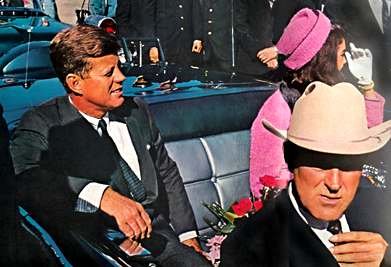
Forty-seven years ago in Dallas...

Saturday, August 28, 2010

Sunday, June 20, 2010


My article in Democracy magazine, reacting to essays by nine progressives, has been published in Democracy's June issue.

Thursday, June 03, 2010

Former President George H.W. Bush, and Mrs. Bush, on Memorial Day, 2010.


He that outlives this day, and comes safe home,
Will stand a tip-toe when this day is nam'd,
And rouse him at the name of Crispian.
He that shall live this day, and see old age,
Will yearly on the vigil feast his neighbours,
And say 'To-morrow is Saint Crispian.'
Then will he strip his sleeve and show his scars,
And say 'These wounds I had on Crispian's day.'
Old men forget; yet all shall be forgot,
But he'll remember, with advantages,
What feats he did that day.  -- Shakespeare's Henry V.


Thanks to Mary Kate Cary and Jean Becker.